What if the biggest risk in a DeFi transaction is not choosing the wrong token, but failing to see the transaction’s full context before signing it? A portfolio spread across Ethereum and several EVM networks can look diversified in a dashboard while remaining operationally fragmented. Balances, approvals, pending swaps, gas costs, and execution risks may sit in different interfaces, each showing only part of the picture.
That fragmentation matters because portfolio visibility and transaction safety are connected. A wallet that helps users understand what they own can also help them understand what a proposed transaction will change. Yet neither multi-chain tracking nor MEV protection is a magic shield. Each addresses a different layer of risk, and the useful question is not whether a wallet sounds secure, but which risks it can observe, reduce, or leave untouched.
From one-chain wallets to fragmented EVM portfolios
Early Web3 wallet use was relatively simple: one address, one network, and a small number of assets. As decentralized finance expanded across Ethereum-compatible chains, the same address could hold tokens, liquidity positions, lending deposits, non-fungible tokens, and governance assets on many networks. The address remained familiar, but the portfolio became distributed.
This created a subtle accounting problem. A user might see a healthy balance on one chain while overlooking an undercollateralized lending position elsewhere, an expired approval, or a large amount of capital exposed to a volatile liquidity pool. The difficulty is not merely displaying token prices. A meaningful portfolio view must connect assets to their chain, protocol, contract, and economic role.
That distinction separates a balance list from a risk map. Ten thousand dollars in liquid stablecoins is not equivalent to ten thousand dollars represented by volatile liquidity-pool tokens, bridged assets, or collateral supporting a leveraged position. Multi-chain tracking becomes genuinely useful when it provides context rather than simply adding numbers across networks.
What a useful multi-chain tracker should reveal
A practical tracking system begins with identity and coverage. It should recognize the same wallet address across supported EVM networks, distinguish native assets from tokens, and avoid treating every contract interaction as an ordinary transfer. It should also make clear when data is incomplete. Unsupported protocols, newly deployed tokens, obscure contracts, and positions whose value depends on complex pricing may not be represented accurately.
The next layer is exposure. Users should be able to ask: How much of my portfolio is tied to one stablecoin? How much depends on a single bridge? Which positions are liquid, and which require several transactions to unwind? How much value is sitting idle on a chain where gas is cheap but monitoring is infrequent?
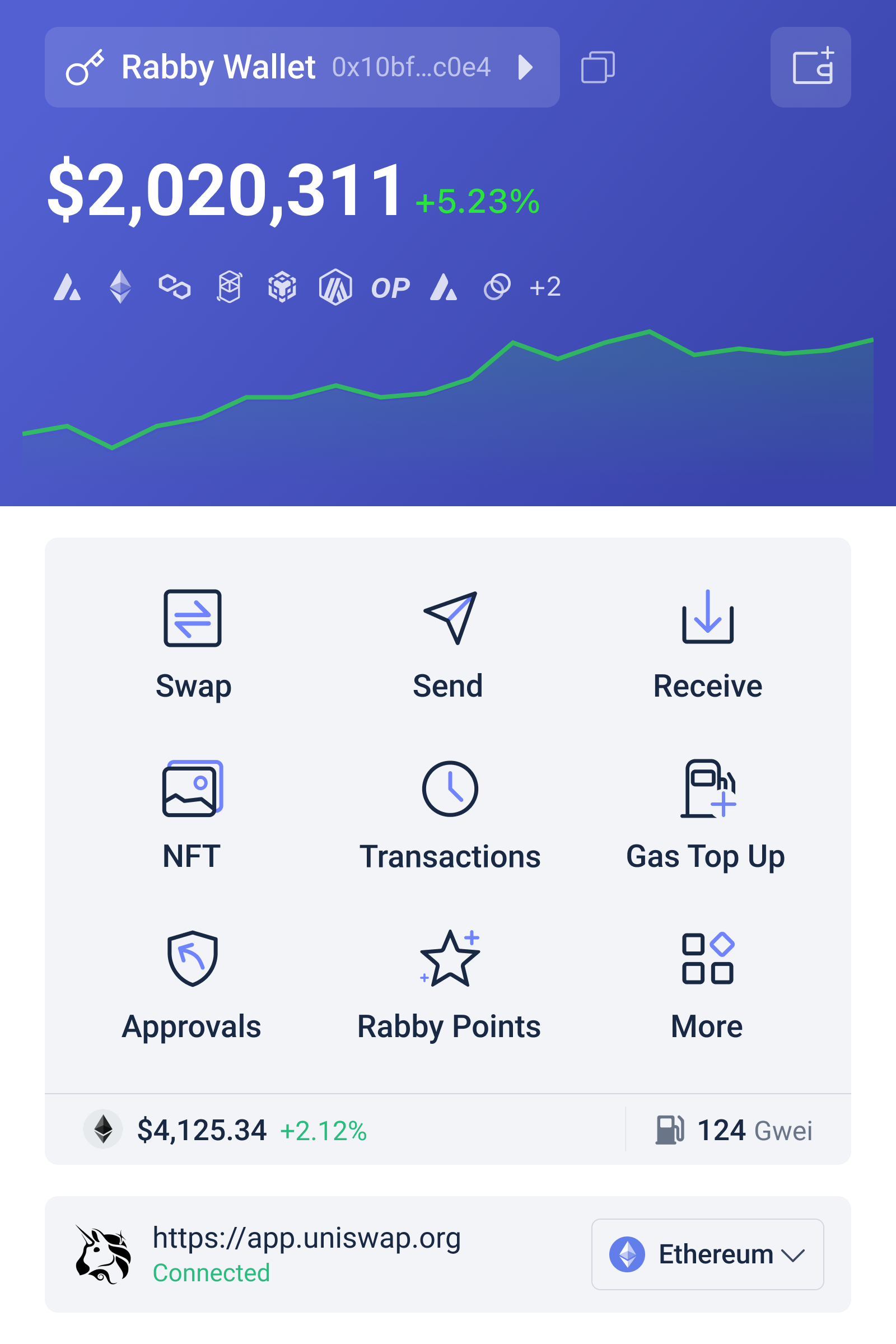
These questions are particularly relevant for US-based DeFi users managing assets across Ethereum and other EVM chains. Tax reporting, treasury controls, and personal risk limits all become harder when activity is dispersed. A wallet such as rabby wallet is most valuable in this setting when its multi-chain support is paired with transaction-level interpretation, rather than being treated as a passive address book.
There is also a behavioral benefit. Clear portfolio context can reduce “interface switching,” the habit of moving between explorers, protocol dashboards, bridge pages, and separate wallets before signing. Fewer fragmented steps may reduce confusion, but convenience creates its own risk: users can become overconfident if a clean interface hides uncertainty instead of explaining it.
MEV protection starts with understanding the transaction path
MEV, or maximal extractable value, refers to value that can be captured by actors who influence or react to transaction ordering. In a decentralized exchange, for example, a pending swap may be visible to block-building infrastructure before it is confirmed. Other participants may attempt to trade before it, after it, or around it if the expected price movement makes that profitable.
The familiar example is a sandwich attack. An attacker places a trade before a victim’s swap, pushes the market price in the victim’s direction, and then sells after the victim’s transaction executes. The result can be worse execution for the user even when the transaction succeeds exactly as intended.
MEV is not identical to fraud, and not every visible pending transaction is exploitable. The likelihood and cost depend on the asset’s liquidity, trade size, slippage settings, mempool visibility, transaction route, block-building practices, and network design. A small trade in a deep market may face limited exposure, while a large swap in a thin pool can be much more sensitive.
This is why “MEV protection” should be treated as a set of mechanisms, not a single feature. Possible approaches include private transaction submission, routing through infrastructure that reduces public mempool exposure, tighter slippage controls, transaction simulation, and execution methods that alter how orders are observed or included. Each can reduce a particular failure mode, but none guarantees the best price or eliminates all information leakage.
Why simulation is a safety feature, not merely a convenience
Transaction simulation addresses a different problem from MEV. It estimates what a transaction is likely to do before the user signs it. A good simulation may show token transfers, approvals, contract calls, balance changes, and warnings about suspicious or unexpected behavior.
That matters because the human-readable label on a button can be misleadingly simple. “Swap,” “stake,” or “claim” may involve several contract calls, an approval, a fee payment, and a change in the wallet’s permissions. Simulation helps translate the request from interface language into state changes: which assets leave, which assets arrive, and which permissions are granted.
The non-obvious point is that simulation and MEV protection operate at different moments. Simulation is mainly about intent and outcome: what the transaction is designed to do under a particular state. MEV protection is mainly about visibility and ordering: who may observe the transaction and how its position in a block could affect execution. A wallet can perform excellent simulation while still sending a transaction through a path exposed to ordering risk. Conversely, private submission does not make a malicious contract call safe.
Simulations also have limits. They are estimates based on available chain state and assumptions about execution. State can change between simulation and inclusion. Some contracts use behavior that is difficult to model, and a simulation cannot fully assess the long-term solvency of a protocol, the quality of an oracle, or the economic risk of an asset. The right mental model is an advance warning system, not a guarantee.
The wallet as a decision layer
The strongest design direction is to treat the wallet as a decision layer between the user and the chain. Portfolio tracking answers, “What is my current exposure?” Simulation asks, “What will this action change?” MEV-aware execution asks, “How might the transaction’s route and ordering affect the result?” Together, these questions provide a more complete pre-trade review.
For example, a user preparing to move a stablecoin between chains should not look only at the quoted amount. They should consider bridge permissions, the receiving asset, settlement assumptions, fees, and whether the bridge creates concentration in a single infrastructure provider. A wallet can surface some of this context, but it cannot replace independent judgment about protocol risk.
A reusable workflow is therefore more valuable than a blanket claim of safety:
- Check the portfolio context before acting, including chain, protocol, and concentration.
- Simulate the transaction and inspect every meaningful balance or permission change.
- Review slippage, route, gas, and whether the transaction is exposed to public ordering.
- Use a more private execution path when the trade size or market conditions justify it.
- After confirmation, verify the resulting balances and revoke unnecessary permissions when appropriate.
This workflow is deliberately conservative. It accepts that extra review takes time and that privacy-oriented routing may involve different infrastructure, fees, or availability. The trade-off is not between safety and no cost; it is between different forms of operational cost and risk.
What changed, and what still has not
The recent positioning of Rabby Wallet as a wallet for Ethereum and EVM networks reflects a broader shift in user expectations. A wallet is no longer just a key-management tool or a place to copy an address. Users increasingly expect one interface to help them navigate many chains, interpret contract interactions, and identify danger before signing.
That direction is useful, but it should not be confused with universal coverage. EVM compatibility does not make all protocols equivalent, and cross-chain visibility does not remove bridge, oracle, governance, smart-contract, or custody risks. A wallet may show that a position exists without proving that its valuation is reliable or that the protocol will remain solvent.
The near-term question is whether wallet interfaces can become more transparent without becoming overwhelming. If they show too little, users sign blindly. If they show too much, important warnings disappear in a wall of technical detail. The most credible systems will likely be those that explain uncertainty in plain language, distinguish high-confidence warnings from weaker signals, and let advanced users inspect the underlying transaction data.
FAQ
Does multi-chain portfolio tracking prevent losses?
No. It improves visibility and may help users notice concentration, illiquidity, or unexpected exposure earlier. It cannot prevent price declines, protocol failures, bridge incidents, incorrect valuations, or user mistakes. Its value depends on data coverage and the user’s willingness to act on the information.
Does MEV protection guarantee the best execution price?
No. MEV-aware tools can reduce certain forms of public exposure or harmful ordering, but price outcomes still depend on liquidity, routing, slippage, fees, timing, and market movement. Private execution can also involve different infrastructure and availability trade-offs.
Why should I simulate a transaction if I already trust the protocol?
Trust in a protocol does not guarantee that the transaction is configured correctly. Simulation can reveal the actual approvals, assets, recipients, and state changes associated with a particular action. It is especially useful when a familiar action is routed through unfamiliar contracts or when the wallet holds assets across several networks.
What is the most important practical habit for DeFi users?
Review the transaction’s consequences, not just its name. Confirm what leaves the wallet, what arrives, which permissions are granted, how execution may be exposed, and whether the action fits the portfolio’s broader risk. That habit remains useful even when wallet tools, protocols, and market conditions change.
Multi-chain tracking and MEV protection are often marketed as separate capabilities, but they address a shared problem: users need better information before irreversible actions occur. The modern wallet is becoming an interpreter of on-chain state and transaction intent. Its real achievement is not making DeFi risk disappear. It is helping users see which risks are visible, which are manageable, and which still require judgment beyond the interface.